 Find An Authorized U.S. or Canadian Hikari® Retailer Near You!


There are two critical things you should focus on as a success-driven aquarium hobbyist. (1) Always use high-quality formulated food for your aquatic pets and (2) make sure to maintain stellar water quality. Bad water quality the leading cause of death for in-experienced hobbyists. Over time, bad water quality can also come from degraded tank decor. A dirty tank can become a visual eyesore within your home. Don’t let an unmaintained fish tank turn you off from the beauty of your own splendid underwater environment.
To ensure that your tank’s water quality is up to par, here are our suggestions:
Perform Weekly Water Changes
The most important part of keeping good water is changing about 15 to 20 percent of your water volume weekly. Regular water changes can help keep levels of toxic ammonia and nitrite down and reduce the debris in your tank. The most popular method of changing aquarium water is with an easy-to-use gravel vacuum. This method will siphon the water in your tank into a clean bucket or sink for disposal. A vacuum can also be used to pick up extra food or physical waste left behind by your fish.
Uneaten food will rot and lead to high levels of ammonia, making it easier for harmful bacteria to make your fish sick. Tap water you will be adding into your tank should ALWAYS be treated with a dechlorinator, as chlorine can damage your established colony of beneficial bacteria. Weekly water changes in short amounts ensure that the water is clean.
Setting Up Your Fish Tank Correctly
For those incorporating substrate, gravel, rocks or sand into your aquascape, use decor that is specifically designed for aquarium use. Substrate often harbors a layer of beneficial bacteria, as it traps bits and pieces of debris and uneaten food. It also can be helpful for added
It may seem like a good idea to use rocks from your backyard, but this may lead to unwanted visitors. Bugs, germs, and bacteria are often incautiously brought into aquariums with this method. Rocks can be used, as long as they don’t mess with the chemical balance inside the tank. Always be sure to properly rinse with clean water before adding any decorations into your aquatic environment.
Avoid Harmful Substrates
It is also important to make sure that the added substrate will not affect the health of your fish or the quality of water over time. A common form of budget-friendly substrate aquarists use is garden soil commonly found at home improvement stores. While this is great for those looking for a convenient way to set up a planted tank, it is wise to look for soil with no added fertilizers, chemicals, heavy compost, or wood chips, as over time these added ingredients will harm your fish. Always sift the soil through a mesh screen to remove potentially harmful debris and thoroughly rinse through the soil before adding. Be prepared to note that higher traces of ammonia or any major changes in pH can be caused by the soil over time.
Gravel and rocks, another popular form of substrate, should be properly rinsed and dried before adding to your aquarium. Colored gravel found in pet stores gets a bad rap for “leaching” toxins into the water. While it may add a bright pop of color to your tank, avoid using gravel made with cheap paint or epoxy coating to avoid harming your fish.
Whether you prefer a natural substrate or colorful substrate, always purchase decorative elements that are safe for aquatic environments. The size and type of the substrate should always depend on the type of aquatic pet you have. Some species, like bottom-dwellers, prefer one type over the other. For example, having a bare-bottom tank for goldfish keepers is highly recommended, as they are known for producing high amounts of waste and eating plants.
Aquarium Filtration is Essential
There are three main types of filtration that are commonly found in the aquarium hobby. Hang-On-Back (HOBs), Sponge Filters, Cannister Filters and Sumps are simple to install and can be found at any pet store. Having a mix of biological and mechanical filtration is important for your aquarium to stay clear. Here are the basics for what and how each one works.
1. Mechanical Filtration: This type of filtration includes sponge filters, filter pads, filter floss and filter socks. Mechanical filtration is best known for removing physical impurities from the water. This method traps any plant matter, fish waste or extra food that is in the water. Mechanical filtration is essential for removing larger pieces and can be rinsed regularly for maximum efficiency.
2. Biological Filtration: Often known as “bio-filter media,” this filtration system collects beneficial bacteria that is converted in a cycled tank. Some common forms include ceramic rings, live or dry rock, sand and even natural stones. A planted tank can also harbor biological filtration as the plants absorb nutrients through the nitrogen cycle. A bio-filter is essential to maintain an ecosystem, as the surface area will allow the nitrifying bacteria to grow. Without stable parameters, your fish are more prone to sickness and diseases caused by water quality.
3. Chemical Filtration: This method of filtration is used for removing waste using a chemical reaction to improve water clarity. Chemical filtration is commonly used alongside media infused with carbon or synthetic polymers. As the reaction only works for a few weeks at a time, this filtration must be replaced more frequently.
Use Aquarium Test Kits Regularly
You can’t fix bad water if you are unaware that it’s not up to snuff. To know where you stand, we recommend testing with a good-quality test kit weekly. Here is what we recommend you should be looking out for when testing your water.
- pH levels – The acidity and alkalinity levels or chemical balance of your aquarium water. Most freshwater fish prefer 6.5 to 8.0, whereas reef ecosystems prefer a higher pH.
- Ammonia – Can be caused by excess amounts of waste and uneaten food. Ammonia is very toxic to fish and can also be introduced by non-conditioned tap water.
- Nitrite levels – NO₂ is also toxic and caused by animal waste. Through the nitrogen cycle, this is what is created when beneficial bacteria consume ammonia and turns into nitrate. High levels of nitrite are dangerous to fish, as they can lead to fish disease and even death.
- Chlorine & Chloramines – Chlorine is commonly found in tap water, as water treatment facilities add it to control bacteria. It can be removed by using a water conditioner or using water collected through reverse osmosis.
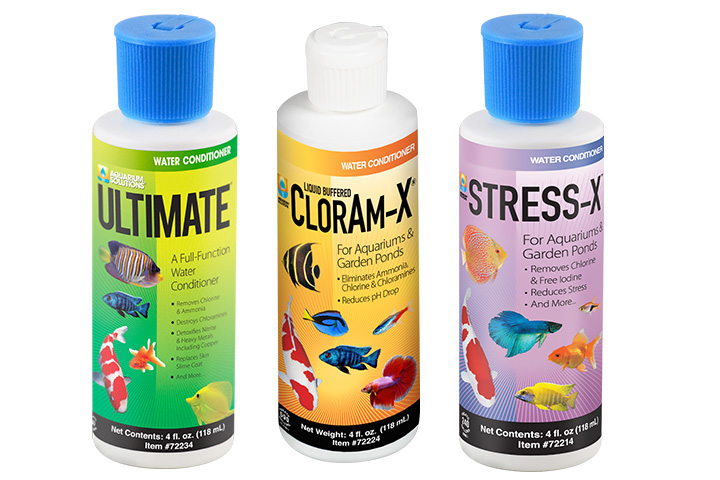
Always ensure that any tap water added to your fish tank is properly conditioned using a reliable water conditioner like Ultimate® by Aquarium Solutions®. If your levels are higher than they are supposed to be, there are a variety of products available to help!
Throughout our years of expertise, our team has developed effective, high-quality solutions to address many water quality issues. Ask your local professional about the conditions of your tank and how Aquarium Solutions® can help restore your tank’s health.