 Find An Authorized U.S. or Canadian Hikari® Retailer Near You!

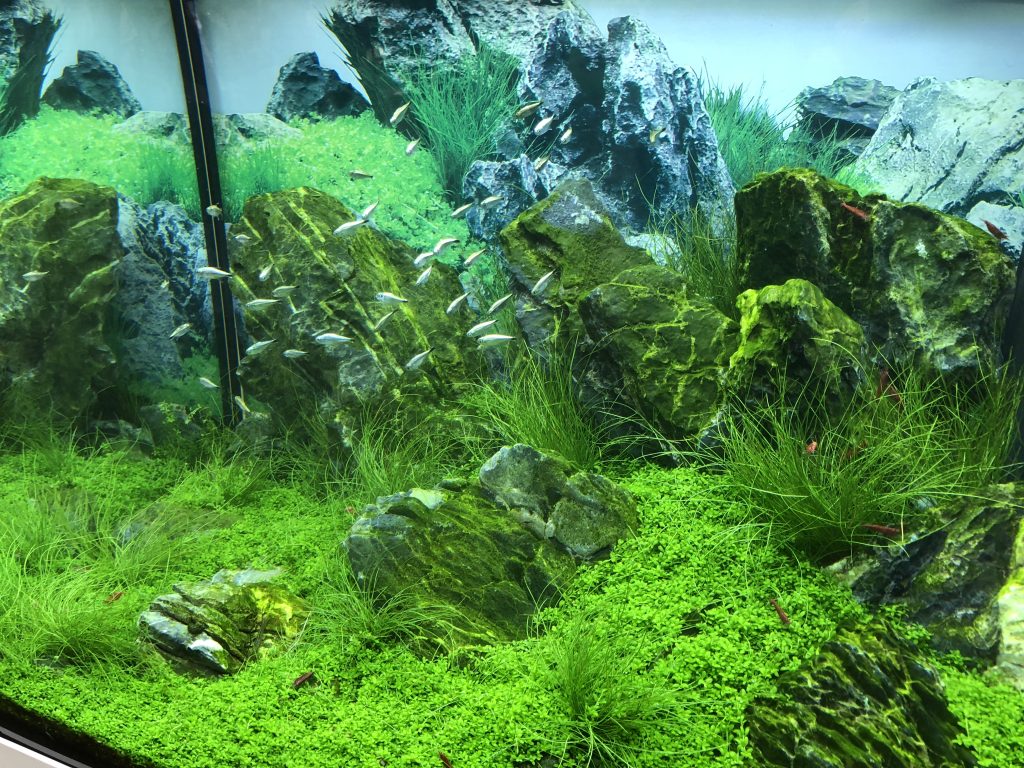
A beautiful tank is very much dependent on a good sense of aesthetic design. The fine art of arranging plants and hardscaping items, including that of driftwood and rocks, is a source of endless inspiration for the budding or established aquarium hobbyist.
If you are looking to aquascape your tank environment and don’t know where to start or just want to change up the look, here are some options to help you. If you have specific questions or need more information, email us at fish@hikariusa.com for help.
Depending on your tank inhabitants and the look you desire, we’ve identified four distinct aquascaping themes:
1. Nature Aquascape

Probably the one most of you picture in your mind when you think of an aquarium. This style of aquascaping has long reigned as the most popular. Dating back decades, when it was developed by a Japanese aquarist using style design concepts found in natural spaces, nature aquariums are inspirational because of their use of rocks, driftwood, and plants aligned to insinuate larger mountains, rainforests, and other elements of nature.
The point of these spaces is to prioritize ambience and flow to echo where you want to be or visit some day in the wild outdoors. Driftwood and spiderwood can be relatively easy to find at your local aquarium store, coming in all shapes and sizes. Large rocks and/or other types of aquarium-safe wood pieces are the main focal point; your pets should highlight these features.
2. Minimalist Aquascape
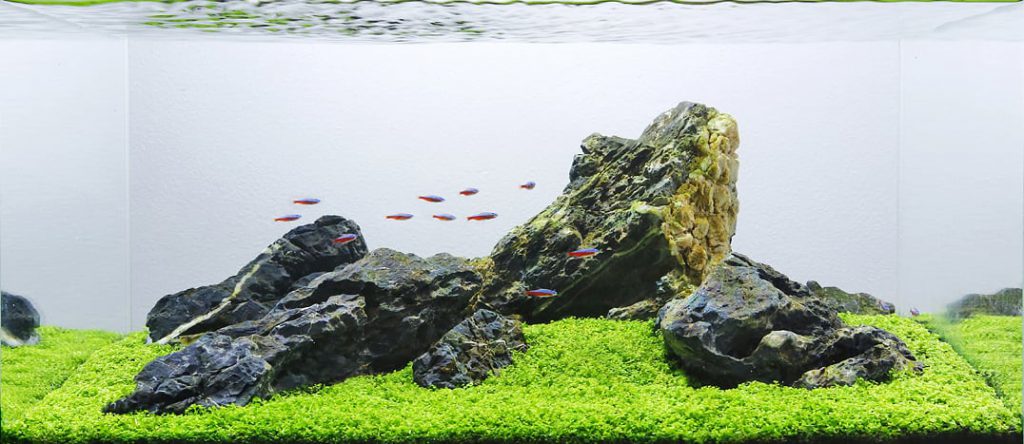
Another common form of freshwater aquascaping is the Iwagumi layout. This style was originally by the aquarist Takashi Amano, one of the biggest names in the industry. The intention with this approach is to reflect a love for beauty, simplicity, and spirituality.
Features often include a focal rock formation in addition to structural harmony accompanied by using any number of smaller stones that create a fluency of space. Iwagumi aquascapes have a focal point that surrounds a single type of plant or rock, inspired by Japanese Zen gardens. A common form of arrangement includes a large rock, often angled at a diagonal for a sense of movement, and uses smaller pieces to draw attention to the focal piece.
3. Dutch Aquascape
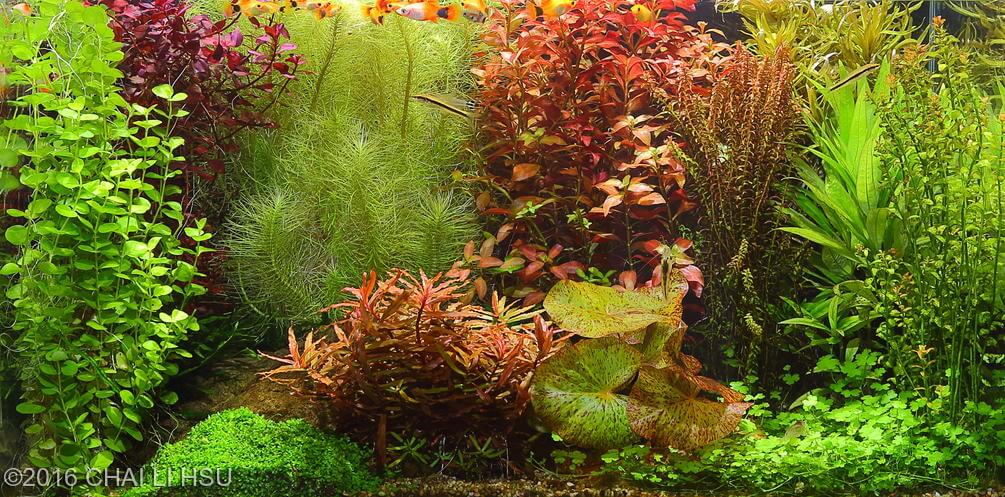
This style was popularized in the 1930s in the Netherlands, mostly pioneered by members of the Dutch Society for Aquarists. The approach here is less attention to the use of hardscaping materials and instead focusing on the soft growth and arrangement of underwater aquatic plants. Each plant is skillfully arranged and maintained regularly, creating a sort of “organized chaos” that is carefully planned out.
The final arrangement should exemplify density, contrast, and subtle use of color. As a live-plant-heavy aquascape, adding liquid fertilizer and experimenting with CO2 is a must. Dutch Aquascapes also encourages you to create a terrain slope with your substrate to form an all-over 3D dimension. Instead of emphasizing a single focal point in your tank, the different layers focus on vibrantly colored aquatic plants that compliment one another. When considering a Dutch aquascape, think of a natural forest in your aquarium.
4. Biotope Aquascape

Favored by mature fishkeepers, this type of aquascaping closely replicates natural environments and strives for strict accuracy for its inhabitants. Longtime hobbyist Heiko Bleher is one of the more popular explorers to focus on the biotope aquascape approach. Aquarists pick a specific geographic location or stick to a singular species and recreate their true natural habitat to the best of their ability with the materials available to them.
Whichever option you chose or if you decide a mixture of any of these is best for your specific situation, it is important to note that in the end, beauty is in the eye of the beholder. Symmetry is difficult to achieve, which is why the Rule of Thirds is what we encourage the most. Focus on composition styles and play around with perspective using plants of different sizes.
Hikari® offers a variety of water quality solutions to help your tank look and smell its best. Each style of aquascaping requires different levels of maintenance, so keep that in mind when researching. Concentrate on what you know you will love and enjoy the most!